
Attic Sounds During Install: What Normal Noise Tells You
Mid-morning on install day, the house sounds different. Footsteps move in lines across the ceiling, drills buzz through plywood, and dust drifts down from a vent you never noticed. From inside the attic those same sounds tell you whether crews are on rafters or on open sheathing between them.
Why the Attic Is a Useful Listening Post
Ground-level observation shows rail layout and flashing. The attic shows what happens on the underside of the deck when someone drills a lag bolt or shifts weight between rafter bays. Plywood flexes differently than a rafter crown. That difference carries through joists and ceiling drywall as a change in pitch and rhythm you can hear from a finished room — but confirm much faster with a flashlight under the roof plane.
You do not need to walk the entire attic during active work. A five-minute listen from the access hatch while crews are on the mount phase gives enough data to ask a targeted question before panel covers hide the layout.
Footsteps: Rafter vs Sheathing
On rafters, footsteps sound short and firm — a quick thud with little echo. On sheathing between rafters, the same boot produces a deeper, springy note, sometimes with a faint squeak as the panel flexes. Crews who know the layout move in a steady cadence along rafter lines. A wandering rhythm, especially back and forth over the same bay, often means someone is searching for solid wood.
The sound that should pause you is not volume — it is repetition. Three passes over the same square of decking without a drill bite usually means the foot location is wrong and the crew is deciding whether to move the rail or force the bolt.
Drilling and Impact Noises
A lag bolt into a rafter produces a tight, short grind through the deck and a solid stop. Into sheathing alone, the drill may run longer before the bit catches, and the impact driver sounds higher and more hollow. From below you might hear a brief pop when the bolt breaks through — normal. What is not normal is a crunch followed by a softer rebound, which can mean the bit wandered between plies or hit a knot edge.
Common drill patterns during mount work include:
- one impact burst per foot, then silence while the installer moves to the next attachment;
- paired bursts when a foot needs a pilot hole and a lag in two steps;
- a longer grinding stretch when a bit is swapped or a missed location is re-drilled.
That last pattern — grind, pause, grind again in nearly the same spot — is the one worth climbing up to see. A second hole six inches from the first is simpler to address before sealant and shingles close over both.
Conduit and Penetration Work From Below
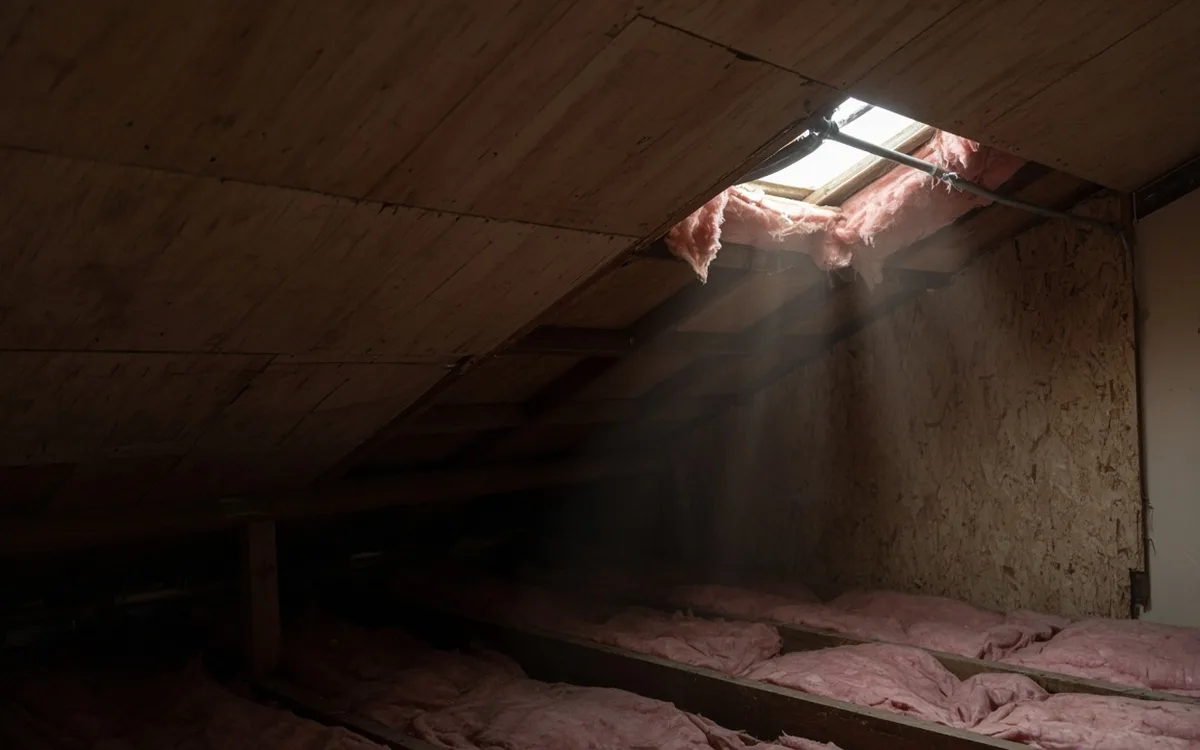
Conduit entries add a different sound profile: a saw or hole saw through decking, then scraping as a boot plate is test-fit. Daylight through a new hole is visible from the attic before the exterior boot is sealed. If you see a shaft of light with no flashing ring yet installed, note the location relative to a rafter bay — leaks at conduit entries often trace to boots that were sealed from the outside only.
Insulation pushed aside near a new hole is normal. Insulation compressed into the hole opening is not — it suggests someone forced a boot without clearing the path and may have bridged the seal.
Sounds That Warrant Stopping the Job Briefly
Not every unusual noise is a crisis. These patterns justify a polite pause and a question to the lead before work continues upslope:
- Repeated drilling in one bay without the foot rhythm moving along the rail line.
- A sharp crack from the deck — splintering plywood can mean a foot landed on a weak span.
- Visible daylight at a bolt hole that stays open more than a few minutes before flashing is applied.
- Foot traffic directly above a finished ceiling area you asked crews to avoid, such as a vaulted section with minimal decking depth.
- Hammering on the deck without a corresponding mount step — sometimes a pry bar correcting a lifted shingle, sometimes forcing a misaligned foot.
Stopping the job for two minutes to look from the hatch costs less than a follow-up visit after panels are live. Frame the question around what you heard, not around accusing the crew of error.
What Normal End-of-Day Quiet Looks Like
When mount work finishes for the day, the attic should settle: no open holes without boots, no loose insulation blocking vent chutes, no tools left on joists. Walk the hatch area after crews leave and compare what you see to what you heard earlier. A location that sounded wrong and looks clean from below still deserves a photo for your records.
If you cannot access the attic safely — low pitch, no flooring, asbestos-era materials — ask the lead for underside photos of each penetration before close-out. The sound map you built from the living room still helps you request the right images instead of a generic job album.